


Not every cleaning service is a good fit for every cleaning business.
Some provide steady, recurring work. Others bring in larger one-time jobs but require more equipment, training, or staff. And a service that looks profitable on paper can quickly become less attractive once you account for travel, supplies, and labor.
The challenge is choosing work that fits your local market and the way you want to run your business.
This guide covers 16 types of cleaning services you can specialize in. We’ll look at what makes each one worth considering, the potential drawbacks, and how to choose services that can support long-term growth.
What Are the Best Cleaning Services to Specialize In?
The best cleaning services to specialize in depend on your startup budget, experience, local demand, and whether you want recurring customers or higher-value individual jobs.
For steady, repeat business, residential cleaning, office cleaning, janitorial services, and short-term rental cleaning are worth considering.
For larger one-time projects, move-in/move-out cleaning, post-construction cleaning, and deep cleaning can be attractive options.
For more specialized work, carpet cleaning, floor care, pressure washing, and medical facility cleaning may help differentiate your business.
Each comes with different equipment, staffing, scheduling, and safety requirements.
Types of Cleaning Services at a Glance
| Cleaning service | Typical work pattern | Main consideration |
| Residential cleaning | Weekly, biweekly, or monthly | Repeat customers, but travel and labor costs matter |
| Deep cleaning | One-time or occasional | More labor and detailed estimates |
| Move-in/move-out cleaning | One-time, often deadline-driven | Larger jobs but less predictable bookings |
| Short-term rental cleaning | Recurring between guest stays | Tight turnaround times and changing schedules |
| Office and janitorial cleaning | Regular commercial contracts | Predictable work but often after-hours |
| Retail cleaning | Daily, weekly, or periodic | Early-morning or evening access |
| School and daycare cleaning | Regular contracts | Detailed cleaning procedures and scheduling requirements |
| Medical facility cleaning | Recurring specialized work | Training, infection-control procedures, and compliance |
| Commercial kitchen cleaning | Recurring and periodic deep cleans | Grease removal, food safety, and specialized tasks |
| Post-construction cleaning | Project-based | Variable job conditions and dust-control requirements |
| Carpet and upholstery cleaning | Periodic or one-time | Equipment investment and material knowledge |
| Window cleaning | Seasonal or recurring | Access, height, and weather considerations |
| Pressure washing | Seasonal or project-based | Equipment, surface damage, and water runoff |
| Hard floor cleaning | Periodic maintenance | Specialized machines and surface treatments |
| Event cleaning | One-time or contract-based | Irregular hours and variable staffing |
| HVAC duct and dryer vent cleaning | Condition-based or periodic | Specialist equipment, safety, and technical expertise |
Residential Cleaning Services
Residential cleaning is a practical starting point for many businesses because most jobs use familiar cleaning methods and relatively accessible equipment.
1. Residential House Cleaning
Regular house cleaning covers the everyday work homeowners want taken off their hands.
Typical services include:
- Vacuuming and mopping floors
- Dusting furniture and surfaces
- Cleaning kitchens and bathrooms
- Emptying trash
- Wiping mirrors and countertops
- Tidying common areas.
Customers may book weekly, biweekly, or monthly appointments depending on their needs and budget. Once you establish a reliable schedule, you can spend less time filling empty appointment slots and more time serving existing customers.
What to consider: Residential cleaning can be competitive. Your profit depends on accurately estimating labor, keeping travel manageable, and delivering consistent results.
Best for: New cleaning businesses and established companies looking for predictable repeat work.
2. Deep Cleaning
A deep clean goes further than everyday household maintenance. Customers usually book this service when their property needs a more thorough clean.
Tasks may include:
- Cleaning baseboards and doorframes
- Scrubbing tile grout
- Cleaning behind accessible appliances
- Removing buildup from kitchen surfaces
- Wiping interior cabinets
- Cleaning hard-to-reach areas.
Deep cleaning generally requires more labor than regular house cleaning, so it needs a different pricing approach.
A property that hasn’t been professionally cleaned in years may take substantially longer than one that’s maintained regularly.
This is why you should assess the property’s size and condition before committing to a fixed price. Our guide to how much to charge for house cleaning explains the pricing methods you can use and the costs to include.
What to consider: Clearly define what’s included. Customers may assume that carpet extraction, heavy stain removal, or cleaning the interior of every appliance is part of the service unless your estimate says otherwise.
Best for: Residential cleaners that want higher-value one-time jobs and a natural first service to offer new recurring customers.
3. Move-In and Move-Out Cleaning
Moving creates an immediate need for cleaning. Tenants want to leave properties in good condition. Landlords need homes ready for new occupants. Homebuyers may want a thorough clean before bringing in their furniture.
Move-in and move-out cleaning usually involves a detailed clean of an empty or nearly empty property.
Common tasks include:
- Cleaning inside cabinets and drawers
- Degreasing ovens and kitchen surfaces
- Scrubbing bathrooms
- Cleaning baseboards and fixtures
- Vacuuming and mopping floors
- Removing dust and minor residue.
The main opportunity is repeat business through professional relationships.
A landlord or property management company may need cleaning across several properties throughout the year, even though each individual job is a one-time appointment.
What to consider: These jobs frequently have strict deadlines. You need reliable staffing and enough flexibility to handle unexpected cleaning requirements.
Best for: Businesses that can accommodate time-sensitive work and build relationships with landlords, real estate agents, and property managers.
4. Short-Term Rental and Vacation Property Cleaning
Short-term rental cleaning is another service built around property turnover. But unlike a typical move-out clean, the same property may need attention several times each month.
Cleaning teams prepare vacation rentals between guests. In addition to standard cleaning, responsibilities may include:
- Changing bed linens
- Laundering towels
- Restocking supplies
- Checking for damage
- Removing trash
- Reporting maintenance issues.
The attraction is repeat work from the same property owners or managers.
However, the schedule depends on guest bookings rather than a fixed weekly appointment.
What to consider: Delays, last-minute reservations, and seasonal demand can make scheduling difficult. Build realistic turnaround times and clear procedures for reporting property problems.
Best for: Cleaning businesses operating in areas with vacation rentals, furnished accommodation, or a strong short-term rental market.
Commercial Cleaning Services
Commercial cleaning serves businesses and other organizations rather than individual households.
These clients may need cleaning several times a week or every day. That can create valuable recurring contracts, although commercial jobs often involve more formal bidding and additional operational requirements.
5. Office and Janitorial Cleaning
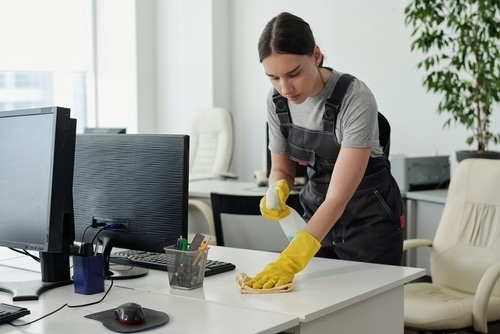
Office cleaning is one of the more straightforward commercial cleaning specialties. Your customers might include professional offices, small business premises, coworking spaces, or larger commercial buildings.
Typical work includes:
- Vacuuming carpets
- Mopping floors
- Emptying trash
- Cleaning restrooms and kitchens
- Wiping desks and shared surfaces
- Replenishing restroom supplies.
The advantage is predictable scheduling. For example, a small office might require cleaning three evenings a week. A larger building may need daily service.
Both arrangements can give you a clearer picture of future workload and revenue than relying entirely on one-time appointments.
If you’re looking to build this side of your business, our guide explains how to get commercial cleaning contracts, from finding prospects to winning recurring work.
What to consider: Commercial clients may require proof of insurance, detailed service agreements, background checks, or cleaning outside normal business hours.
Best for: Cleaning companies ready to manage regular commercial contracts and multiple employees.
6. Retail Store Cleaning
Retail businesses need clean, welcoming spaces for customers and staff. Your clients could include independent shops, showrooms, shopping centers, or multi-location retailers.
Services commonly include:
- Cleaning floors and entryways
- Wiping counters and display surfaces
- Washing interior glass
- Cleaning customer and employee restrooms
- Removing trash
- Maintaining fitting rooms and shared spaces.
Retail cleaning can work particularly well when you establish repeat contracts with several businesses in the same area.
What to consider: Many stores expect cleaning to be done before opening or after closing. You’ll need to coordinate access, security procedures, and employee availability.
Best for: Commercial cleaning businesses that can organize efficient routes and offer flexible working hours.
7. School and Daycare Cleaning
Schools, childcare centers, and educational facilities need cleaning that reflects how their buildings are used.
A classroom has different requirements from an office. Along with floors and restrooms, cleaners may need to pay close attention to desks, shared equipment, play areas, and frequently touched surfaces.
Common work includes:
- Cleaning classrooms and shared spaces
- Sanitizing appropriate surfaces
- Maintaining bathrooms
- Cleaning cafeterias and eating areas
- Emptying waste containers
- Deep cleaning during scheduled closures.
These facilities can provide regular work, with additional cleaning opportunities during holidays or school breaks.
What to consider: Expect detailed procedures, restricted access hours, background-screening requirements, and specific product-use instructions.
Best for: Established cleaning companies with trained employees and consistent quality-control procedures.
8. Medical Facility Cleaning
Medical cleaning is a more specialized branch of commercial cleaning. Clinics, dental practices, outpatient facilities, and other healthcare settings need cleaning procedures appropriate to their patient populations and the services they provide.
This may include:
- Cleaning waiting rooms and reception areas
- Disinfecting designated high-touch surfaces
- Maintaining restrooms
- Cleaning treatment areas according to facility protocols
- Following documented infection-prevention procedures.
Medical cleaning differs from ordinary office cleaning because mistakes can have more serious consequences.
What to consider: Don’t assume that experience cleaning offices is enough to accept a healthcare contract. Confirm training, insurance, legal requirements, and the scope of work before bidding.
Best for: Established commercial cleaning businesses prepared to invest in specialist training and documented procedures.
9. Restaurant and Commercial Kitchen Cleaning
Restaurants, cafeterias, catering facilities, and commercial kitchens need cleaning that goes beyond making a space look tidy.
Services may include:
- Degreasing appropriate surfaces
- Cleaning kitchen floors
- Washing accessible fixtures
- Cleaning designated food preparation areas
- Maintaining dining spaces and restrooms
- Periodic deep cleaning.
Restaurants often need regular cleaning, along with more intensive work outside trading hours. That makes this a potential source of repeat contracts.
What to consider: Specialist work, such as duct cleaning, is a separate service with additional technical and fire-safety requirements. Don’t include those tasks in a standard cleaning contract unless your crew is properly qualified and equipped.
Best for: Commercial cleaners comfortable with after-hours work and the specific procedures required in food-service environments.
Specialty Cleaning Services
Specialty cleaning focuses on particular surfaces, situations, or technical requirements. These services can help a cleaning company stand out, especially when it develops expertise that general cleaners don’t offer.
10. Post-Construction Cleaning
Construction and renovation projects leave behind dust, packaging, residue, and debris. Before a property can be handed over to its owner or occupants, it usually needs detailed cleaning.
Post-construction services may include:
- Removing fine dust from surfaces
- Cleaning windows and fixtures
- Vacuuming and mopping floors
- Removing paint or adhesive residue using suitable methods
- Cleaning kitchens and bathrooms
- Preparing rooms for occupancy.
You may be working with homebuilders, remodeling contractors, property developers, or commercial construction companies. These relationships can lead to additional projects as contractors complete new jobs.
What to consider: Construction sites involve hazards that ordinary cleaning teams may not encounter. Dust, debris, and waste may require specialist controls. For example, OSHA’s silica dust regulations set requirements for controlling exposure to hazardous dust during construction work.
Best for: Cleaning businesses with the equipment, trained staff, and contractor relationships to manage project-based work.
11. Carpet and Upholstery Cleaning
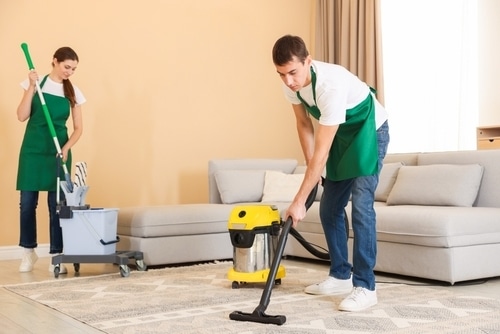
Carpets, rugs, sofas, and upholstered furniture need more than routine vacuuming. Professional cleaning can remove accumulated dirt and many stains, although the results depend on the material, the type of contamination, and the cleaning method.
Services may include:
- Hot-water extraction
- Spot and stain treatment
- Odor treatment
- Upholstery cleaning
- Carpet maintenance for commercial properties.
Carpet cleaning works as either a standalone business or an additional service for residential and commercial clients.
What to consider: Extraction machines and other equipment require investment. Your team also needs to understand different carpet fibers, fabrics, cleaning chemicals, and drying requirements to avoid damage.
Best for: Cleaning businesses looking to add a specialist service with opportunities for repeat maintenance and upselling.
12. Window Cleaning
Window cleaning serves both residential and commercial customers.
Services can include:
- Interior and exterior glass cleaning
- Cleaning frames and sills
- Washing screens and tracks
- Removing suitable types of surface residue
- Periodic commercial window maintenance.
For residential customers, window cleaning may be seasonal. Commercial clients may want more frequent visits to keep storefronts, offices, and other premises presentable.
What to consider: Access matters. Ground-floor storefronts are very different from high-rise commercial buildings. Working at height introduces additional training, equipment, insurance, and safety requirements.
If you decide to offer this service, our guide to pricing window cleaning jobs covers different pricing models, including per-window, per-pane, hourly, and flat-rate pricing.
Best for: Businesses that want an exterior cleaning specialty with opportunities for scheduled maintenance.
13. Pressure Washing
Pressure washing removes dirt and buildup from suitable outdoor surfaces using pressurized water. Customers may need driveways, sidewalks, patios, building exteriors, or commercial areas cleaned.
Typical services include:
- Driveway and walkway cleaning
- Patio cleaning
- Certain types of exterior building washing
- Commercial pavement cleaning
- Surface preparation.
Pressure washing creates opportunities to serve homeowners, property managers, and commercial clients. It can also pair well with window cleaning and other exterior maintenance services.
What to consider: Incorrect pressure can damage siding, wood, masonry, and other surfaces. Weather can also affect demand and scheduling.
Best for: Cleaning businesses interested in exterior property maintenance and prepared to invest in appropriate equipment and training.
14. Hard Floor Cleaning and Maintenance
Commercial flooring needs ongoing attention, especially in buildings with heavy foot traffic. A business might offer regular floor cleaning alongside specialist services, including:
- Machine scrubbing
- Buffing and polishing
- Stripping and refinishing suitable floors
- Tile and grout cleaning
- Floor maintenance programs.
Potential customers include offices, schools, retail buildings, warehouses, and other commercial facilities.
What to consider: Different flooring materials require different techniques and products. Using the wrong treatment can damage a floor and create expensive problems for your business. Specialist machines, chemicals, and operator training add to startup costs.
Best for: Commercial cleaners expanding into property maintenance or businesses building a specialty around floor care.
15. Event Cleaning
Events create a short, concentrated demand for cleaning. Wedding venues, conference centers, exhibition spaces, and event organizers may need assistance before, during, or after an event.
Services can include:
- Preparing spaces before guests arrive
- Maintaining restrooms and common areas
- Emptying bins during events
- Cleaning floors and surfaces afterward
- Removing agreed-upon waste
- Preparing venues for the next booking.
Event cleaning offers variety and can lead to ongoing relationships with venues that host regular functions.
What to consider: Work may fall on evenings, weekends, or holidays. The required crew size can change significantly from one event to the next.
Best for: Businesses with flexible staffing and the ability to manage work around changing event schedules.
16. HVAC Duct and Dryer Vent Cleaning
HVAC duct and dryer vent cleaning involves removing accumulated material from specific parts of ventilation systems.
Dryer vent cleaning focuses on removing lint and obstructions from dryer exhaust systems. Air duct cleaning concerns dust, debris, or contamination within an HVAC duct system.
Both require suitable equipment and knowledge of the system being serviced.
What to consider: Avoid advertising routine air duct cleaning as something every building needs annually. The EPA’s guidance on air duct cleaning does not recommend routine duct cleaning for every home.
These services are better suited to properly trained providers who can assess whether cleaning is appropriate and carry out the work without damaging the system.
Best for: Businesses prepared to develop specialized ventilation-system expertise rather than adding duct cleaning as a general housekeeping service.
Which Cleaning Services Are Most Profitable?
There isn’t one cleaning specialty that’s automatically the most profitable. The real question is how much revenue remains after paying for the work.
A large post-construction job might bring in more money than several residential appointments. But if it requires an expensive equipment rental, additional workers, and several unexpected return visits, the profit could be much smaller than expected.
Different services offer different advantages.
| Business goal | Services worth evaluating | Why |
| Predictable recurring revenue | Residential, office, and janitorial cleaning | Customers may book regular visits |
| Larger individual projects | Deep, move-out, and post-construction cleaning | More extensive work per appointment |
| Specialist differentiation | Carpet cleaning, floor care, and medical cleaning | Additional expertise and equipment can distinguish providers |
| Add-on revenue | Upholstery, interior windows, and appliance cleaning | Can be sold to existing customers |
| Relationships with property businesses | Rental turnovers and post-construction cleaning | Property managers and contractors may generate repeat referrals |
How to Choose the Right Cleaning Services for Your Business
A long list of possible services is useful for generating ideas. But you don’t need to offer all of them.
Here’s how to narrow down your options.
1. Check Local Demand Before Investing
Start by finding out who needs cleaning in your area.
Look beyond the number of people living nearby. Consider the types of properties and businesses that might need your services.
For example:
- An area with many apartments and rental properties may offer opportunities for move-out cleaning.
- A city with a large office district may support recurring commercial cleaning.
- A neighborhood with vacation rentals may create demand for property turnover services.
- An area with active construction may offer post-construction cleaning opportunities.
Search for local cleaning businesses, review what they offer, and read customer reviews. Pay attention to complaints about availability, reliability, communication, or services competitors don’t provide.
The goal is to establish whether enough customers need the service and whether you can give them a reason to choose your business.
Related: How to Start a Cleaning Business
2. Calculate Your Startup and Operating Costs
Every specialty has a different cost structure.
Residential cleaning may require standard supplies, vacuums, transportation, and insurance.
Carpet cleaning could involve purchasing extraction equipment. Commercial floor maintenance may require specialized equipment, chemicals, and training.
Before adding a service, calculate:
- Equipment and supply costs
- Labor requirements
- Insurance and licensing needs
- Training and safety requirements
- Travel and transportation
- Equipment storage and maintenance
- Marketing and customer acquisition.
Then estimate how many jobs you’ll need to recover your initial investment.
The Small Business Administration’s business-planning and break-even guidance explains how to calculate startup costs and estimate when revenue will cover your expenses.
Don’t assume a service is profitable simply because customers are willing to pay more for it. Higher prices often reflect higher costs and more demanding work.
3. Decide Between Recurring and One-Time Jobs
Recurring contracts can make planning easier. If you clean the same properties every week, you have a clearer idea of labor requirements, supplies, travel, and expected revenue.
One-time jobs offer a different advantage.
A move-out clean or post-construction project may provide a larger invoice and help fill gaps in your regular schedule. But those customers don’t necessarily need the service again soon.
A useful approach is to combine a reliable recurring service with related one-time work.
For example, a residential cleaning company might offer weekly housekeeping, then add deep cleaning and move-out services.
That gives customers more reasons to hire you without forcing you to build several unrelated businesses.
4. Match the Service to Your Team’s Skills
Some cleaning services are relatively straightforward to teach and standardize. Others need specialist knowledge, equipment, and strict safety procedures.
Before expanding into a new service, ask:
- Can our current employees do this work properly?
- What additional training will they need?
- Can we use existing equipment?
- Are there safety or regulatory requirements?
- Will we need additional insurance coverage?
- Can we complete the work consistently as we hire more people?
Think beyond the first few jobs.
You may be able to perform specialized cleaning yourself, but can another employee meet the same standard after appropriate training?
If the answer is no, the service may be harder to scale than it first appears.
5. Test the Service Before Expanding
You don’t need to commit to an entirely new business model immediately.
Start with a limited offer and learn from the results.
For example, you might introduce carpet cleaning to a small group of existing residential customers or offer move-out cleaning to one property management company.
After several jobs, review:
- Average revenue per job
- Actual labor hours
- Travel and supply costs
- Profit after expenses
- Customer feedback
- Repeat bookings and referrals.
You may discover that a service has strong demand but takes longer than expected. Or you may find that an add-on service fits naturally into your existing schedule and earns a better margin than anticipated.
Use those results to decide whether to expand, change your pricing, or try a different specialty.
Related: How to Better Manage a Cleaning Service Business
How Service Fusion Helps You Manage a Growing Cleaning Business
The more cleaning services you offer, the more moving parts you need to manage.
Regular house cleaning appointments, commercial contracts, and one-time deep cleans can all have different schedules, crews, and customer requirements.
Service Fusion’s cleaning service software brings those jobs together, helping your office stay organized while your cleaners focus on the work.
Here’s how it supports your business:
Scheduling and dispatch: Plan recurring cleanings, assign jobs, and adjust schedules without rebuilding everything when plans change.
Customer and job management: Keep customer information, service details, and job histories together so employees don’t have to search through separate records.
Mobile access: Give cleaning crews access to assigned jobs and customer information while they’re out in the field.
Invoicing and payments: Move work from estimates to invoices and payments, with QuickBooks Online and Desktop integration to support accounting.
Unlimited users: Add cleaners, supervisors, and office employees without additional per-user subscription fees.
These tools help reduce duplicate administrative work, improve visibility across your crews, and make it easier to manage more customers.
You can focus on building a cleaning business that runs well, not just one that stays busy.
Take the Next Step With Service Fusion
Adding a cleaning specialty is one way to grow. Having the right systems in place helps you manage that growth.
Whether you’re handling recurring residential appointments or multiple commercial cleaning contracts, Service Fusion can help you keep the operation organized.
FAQs About Cleaning Services
What is the easiest cleaning business to start?
General residential cleaning is often one of the more accessible starting points because it typically requires less specialized equipment and training than medical cleaning, commercial floor refinishing, or ventilation cleaning.
Small office cleaning may also be an option for businesses comfortable working outside standard hours.
You’ll still need to account for insurance, business registration, supplies, safety, transportation, and customer acquisition.
Small office cleaning may also be an option for businesses comfortable working outside standard hours.
You’ll still need to account for insurance, business registration, supplies, safety, transportation, and customer acquisition.
Should a cleaning company offer multiple services?
Offering complementary services can help attract more customers and increase revenue from existing relationships.
But trying to provide too many unrelated services can make staffing, equipment, training, and scheduling harder to manage.
It’s usually more practical to establish one reliable core service before adding related specialties.
But trying to provide too many unrelated services can make staffing, equipment, training, and scheduling harder to manage.
It’s usually more practical to establish one reliable core service before adding related specialties.
What’s the difference between regular cleaning and deep cleaning?
Regular cleaning focuses on maintaining a property through routine tasks such as vacuuming, mopping, dusting, and cleaning kitchens and bathrooms.
Deep cleaning involves more detailed work, such as scrubbing grout, wiping baseboards, and cleaning areas that aren’t covered during regular visits.
Because deep cleaning takes more time, it should have a clearly defined scope and a price that reflects the additional labor.
Deep cleaning involves more detailed work, such as scrubbing grout, wiping baseboards, and cleaning areas that aren’t covered during regular visits.
Because deep cleaning takes more time, it should have a clearly defined scope and a price that reflects the additional labor.
Is residential or commercial cleaning better for a new business?
Residential cleaning can be easier to enter because jobs are often smaller and require fewer specialized procedures.
Commercial cleaning may offer larger recurring contracts, but winning and delivering them can require additional staff, insurance, documentation, and operational planning.
Neither is automatically better. Choose based on your experience, local demand, available resources, and long-term goals.
Commercial cleaning may offer larger recurring contracts, but winning and delivering them can require additional staff, insurance, documentation, and operational planning.
Neither is automatically better. Choose based on your experience, local demand, available resources, and long-term goals.
Article Sources
- Occupational Safety and Health Administration (OSHA), Occupational Exposure to Respirable Crystalline Silica: Frequently Asked Questions for the Construction Industry, December 2018.
- U.S. Environmental Protection Agency (EPA), Should You Have the Air Ducts in Your Home Cleaned?, updated February 19, 2026.
- U.S. Small Business Administration (SBA), Calculate Your Startup Costs, updated July 19, 2024,
Related Posts
Must-Have Tools for HVAC Technicians
Continue ReadingHow Kuhlman Electric Found Their Field Service ‘Game Changer’ and Doubled Revenue
Continue ReadingStay Informed
Get the latest news and insights plus, Service Fusion offers and updates.Thank you for your submission.
SHARE