


HVAC Technician Certification: What It Means and Why It Matters
Heating, ventilation, and air conditioning systems power homes, businesses, and industrial environments. Behind every installation, repair, or inspection is a skilled technician trained to keep these systems efficient and safe. This is where HVAC technician certification becomes essential. Certification validates technical knowledge, safety competence, and the ability to handle complex equipment responsibly.
As demand for climate control systems continues to rise, HVAC service technicians face growing opportunities for stable careers, higher salaries, and specialization. Certification is the key to unlocking those opportunities. It ensures technicians meet national and state standards while giving customers confidence in the quality of their work.
Why HVAC Certification Is Required Across the Industry
HVAC work involves refrigerants, electrical components, ventilation, and systems that directly impact indoor air quality and energy use. Certification ensures that technicians:
- Understand environmental regulations
- Handle refrigerants safely
- Follow proper installation and repair procedures
- Comply with national codes and manufacturer guidelines
- Work safely with electrical and mechanical components
Without proper certification, technicians may be limited in what tasks they can legally perform, especially when working with regulated refrigerants or commercial HVAC systems.
Certification also plays a major role in employability. Most contractors, service companies, and commercial clients require HVAC technician certification as a condition of hiring.
Types of HVAC Technician Certification Beginners Should Know
There are several certification types, each covering different levels of responsibility and system complexity.
- EPA Section 608 Certification – Required for anyone who handles refrigerants. It includes four categories depending on the equipment type.
- NATE Certification – Recognized nationwide and respected by employers for validating advanced skills in installation and service.
- HVAC Excellence Certification – Used for demonstrating both entry-level and professional-level competency.
- State-Level Licensing or Exams – Some states require additional testing before technicians can work independently.
Understanding these certification paths helps technicians choose the right direction based on their career goals.

Essential Skills HVAC Service Technicians Must Master
HVAC systems combine mechanical, electrical, and environmental science. Skilled HVAC service technicians learn to diagnose issues quickly, follow safety protocols, and deliver reliable service.
Key foundational skills include:
- Reading wiring diagrams and system schematics
- Understanding airflow measurements and load calculations
- Troubleshooting electrical components
- Handling refrigerant recovery and charging
- Identifying ventilation issues
- Inspecting ductwork and mechanical assemblies
- Communicating findings to customers clearly
Certification training strengthens these skills through structured learning and hands-on practice.
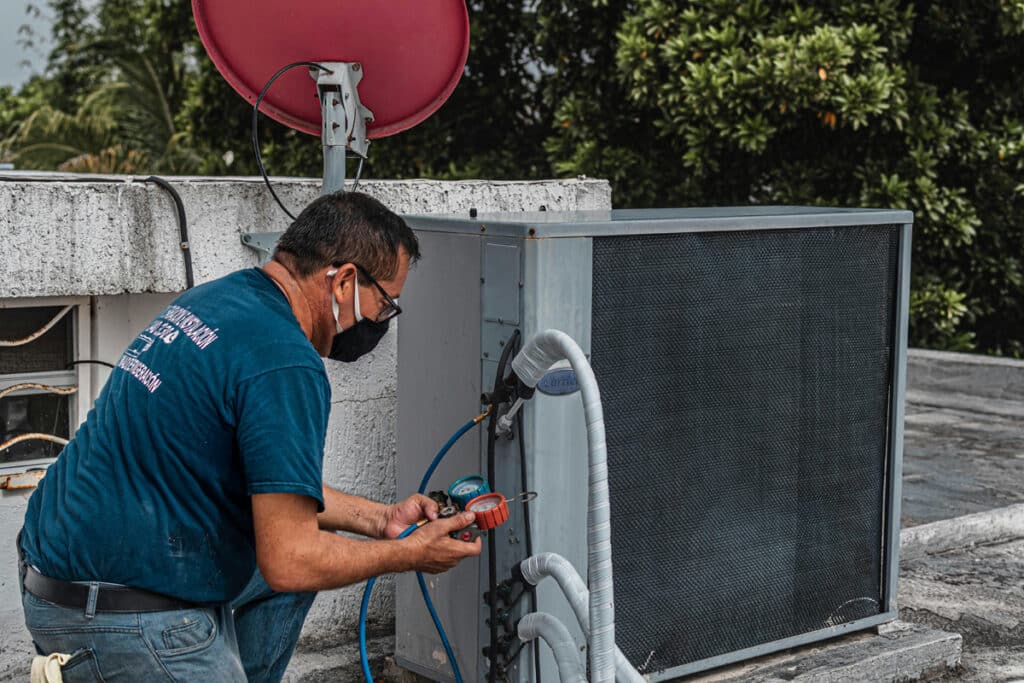
The HVAC Service Tools Every Technician Should Learn to Use
Every HVAC technician relies on a core set of tools to diagnose problems, complete repairs, and verify system performance. Becoming familiar with these tools early helps new technicians build confidence and accuracy in the field. Understanding what each tool does and why it matters is an important part of preparing for HVAC technician certification.
- Manifold Gauges – Manifold gauges allow technicians to measure system pressures, check refrigerant balance, and evaluate whether a system is operating within safe and efficient ranges. Beginners learn how to read pressure values and use them to identify common system issues.
- Multimeters – Electrical testing is a major part of HVAC work, and multimeters are essential for checking voltage, continuity, resistance, and other electrical conditions. This tool helps technicians confirm whether motors, capacitors, wiring, or control boards are functioning correctly.
- Refrigerant Scales and Leak Detectors – HVAC systems depend on precise refrigerant levels. Scales help ensure accurate charging, while leak detectors help locate even small leaks that can reduce system efficiency or violate environmental regulations. Knowing how to use these tools prevents costly performance issues.
- Thermometers and Hygrometers – Temperature and humidity readings provide valuable insight into system performance. Technicians use these tools to compare supply and return air temperatures, evaluate airflow, and confirm whether equipment is meeting comfort and efficiency expectations.
- Vacuum Pumps – Before adding refrigerant to a system, technicians use vacuum pumps to remove air and moisture. Proper evacuation ensures efficient operation and prevents internal contamination that could damage components over time.
- Hand Tools and Specialty Tools – Basic hand tools, including tubing cutters, pliers, nut drivers, and flaring tools, are used throughout installations and repairs. These tools help technicians shape tubing, secure connections, and assemble components correctly.
Developing familiarity with these tools gives technicians a strong foundation for diagnosing problems accurately and performing reliable HVAC service.

Training Process: How Technicians Prepare for Certification
Preparing for HVAC technician certification involves both learning the science behind HVAC systems and gaining hands-on experience. The combination of technical knowledge and real-world application ensures that new technicians can work safely, diagnose problems accurately, and handle modern equipment confidently.
Classroom Education
Training usually begins with structured coursework. Students learn refrigeration theory, electrical systems, ventilation design, safety procedures, and environmental regulations. This foundational knowledge helps them understand how HVAC systems work and why each component matters.
Hands-On Training
In labs or training centers, students practice installing equipment, performing routine maintenance, checking system performance, and using diagnostic tools. Hands-on training helps beginners apply what they’ve learned while developing comfort around HVAC components and tools.
Apprenticeship or Field Experience
Many technicians strengthen their skills through apprenticeships, mentorship programs, or entry-level jobs. Working alongside experienced HVAC service technicians exposes them to real service calls, customer interactions, and a variety of system types.
Certification Exams
After completing the required education and field hours, technicians take exams that assess their understanding of refrigeration, airflow, electrical troubleshooting, heat transfer, and safety. Passing these exams confirms they have the knowledge and skills needed for professional HVAC work.
Training requires dedication, but it builds a clear pathway to a stable, in-demand career with strong long-term growth opportunities.
How Much Does a HVAC Technician Make? Understanding Real Salaries
Many people researching certification also want to know how much does a HVAC technician make or how much does an HVAC tech make. Income varies by certification level, location, experience, and specialization.
Beginning technicians often earn entry-level wages while learning the trade. Certified or experienced technicians earn significantly more, especially when working with commercial systems or advanced diagnostics.
Specializations that increase earnings include:
- Refrigeration and low-temperature systems
- Commercial HVAC
- Heat pumps and hydronics
- Building automation systems
- Indoor air quality solutions
Strong demand and growing HVAC installations continue to push salaries upward across the industry.
Industry Trends Shaping Certification Requirements
Anyone entering the field should stay informed about HVAC industry news today, since technology and regulations evolve quickly. Key trends include:
- Growth in energy-efficient systems and smart thermostats
- Increased adoption of heat pumps in residential markets
- New refrigerant regulations and phase-outs
- Demand for building automation and zoning systems
- Rising need for indoor air quality solutions
- Stronger focus on sustainability and environmental protection
Certification programs continue to update their requirements to reflect these advancements, ensuring technicians stay competent in modern systems.
Why Certification Helps You Stand Out in a Growing Market
Industry demand continues to rise as homeowners, businesses, and facilities rely on energy-efficient systems, smart controls, and updated equipment. With HVAC technology evolving quickly, certified technicians have a clear advantage. Certification validates a technician’s training, safety knowledge, and ability to work with modern systems, which is exactly what customers and employers look for when choosing someone to trust with their equipment.
Certified technicians are often given access to more complex service calls, advanced diagnostics, and specialty repairs. This leads to higher earning potential, better job stability, and opportunities for leadership roles within HVAC companies. Employers prefer certified professionals because they require less supervision and can handle a wider range of tasks with confidence.
For anyone starting in the field, HVAC technician certification provides credibility from day one. It helps build confidence, strengthens technical skills, and lays the foundation for long-term career growth in an industry that continues to expand year after year.
Supporting Your Certification Journey With Better Tools and Systems
Becoming certified is the first step, but maintaining a professional workflow matters just as much. Organized scheduling, accurate invoicing, technician tracking, and clear customer communication help HVAC businesses run smoothly.
Using platforms offered by Service Fusion supports technicians and HVAC service companies by simplifying operations, improving customer experience, and reducing paperwork. As technicians grow in the field, modern tools make daily work more manageable and more efficient.
Related Posts
Best Field Service Software for Businesses With 5 to 20 Technicians (2026)
Continue ReadingField Service Software Data Migration Checklist
Continue ReadingStay Informed
Get the latest news and insights plus, Service Fusion offers and updates.Thank you for your submission.
SHARE