

Commercial vs Residential Plumbing: What’s the Difference?
The difference between commercial and residential plumbing is the type of jobs you’ll work on. Put simply:
- Commercial plumbers work on commercial buildings. Think schools, hospitals, office buildings, and restaurants.
- Residential plumbers work where people live. That might be a single-family home or an apartment.
Here’s a summary of the differences.
| Area | Residential Plumbing | Commercial Plumbing |
| Job size | Single homes or small units | Large buildings and multi-site projects |
| System scale | Fewer fixtures and shorter pipe runs | Larger systems with higher demand usage |
| Job type | Repairs, installs, emergency callouts | New builds, upgrades, service agreements |
| Timeframe | Hours to a few days | Weeks to months |
| Client type | Homeowners | Business owners, builders, facility teams |
| Revenue | Frequent smaller invoices | Larger invoices with longer payment terms |
Understanding how these factors affect your livelihood is more important now than ever. Demand in the industry is as steady as ever, thanks to repair and emergency work. But costs are up.
The price of fixtures and fittings rose 28.4% from 2021 to 2025. You’ll need to pass these costs on to your customers to protect your margin, which can be tricky.
What’s more, the industry has grown 3.1% per year over five years, reaching $191.4 billion in 2026. Of course, growth is good for everyone. That said, it can mean more competition.
RELATED ARTICLE — Plumbing Industry Statistics: Market Size and Trends in 2026
What Is Residential Plumbing?
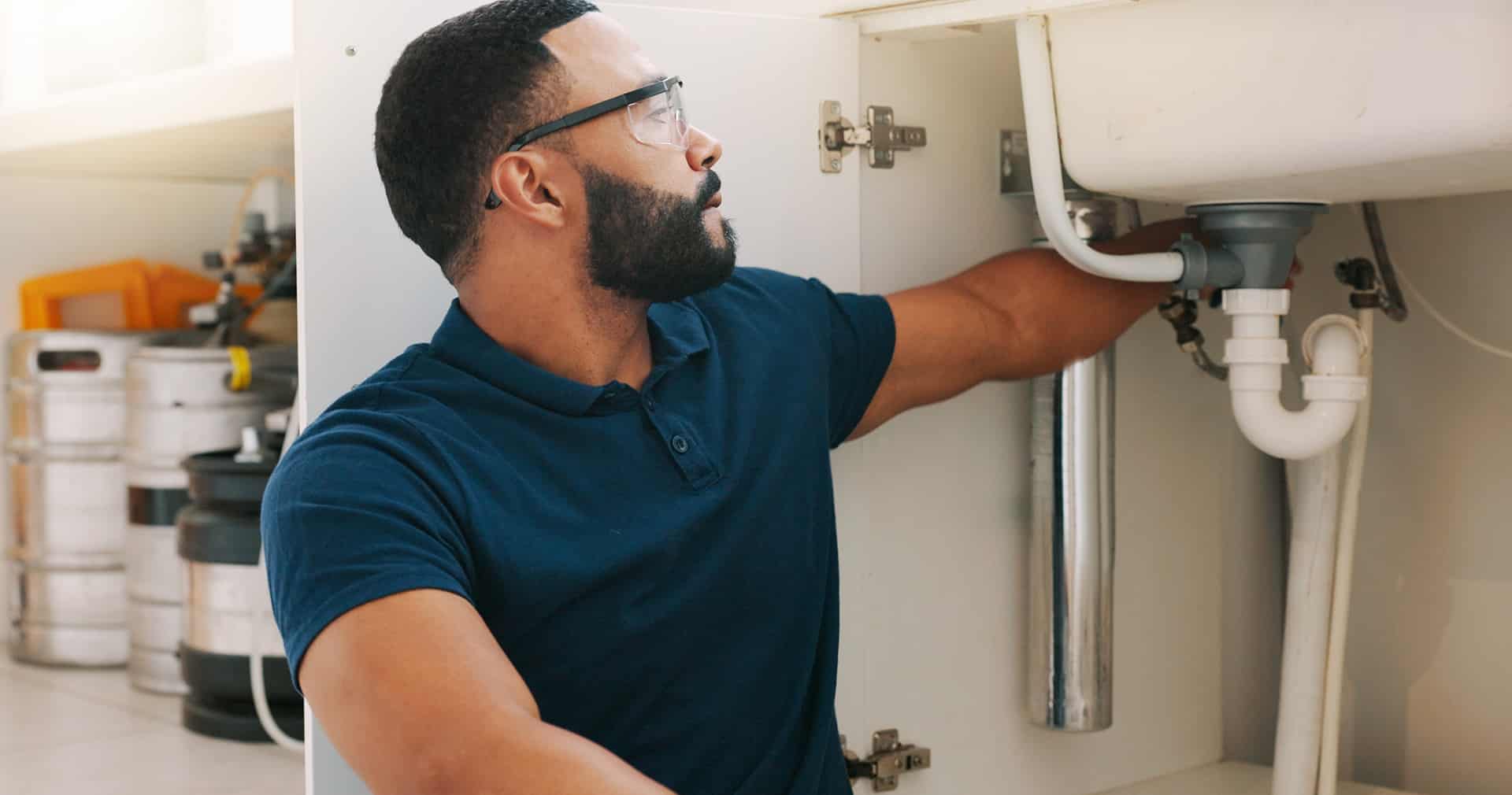
Residential plumbing services cover water, gas, and drainage in homes. You’ll work in houses, units, and small dwellings. Jobs are shorter, and service calls happen every day.
Let’s take a closer look.
Common Systems in Residential Plumbing
Residential plumbers work with systems that serve one household at a time. These systems are smaller and easier to access. For example:
- Water supply lines that feed taps and appliances.
- Drainage systems that carry wastewater out of the home.
- Hot water units like storage tanks or instant systems.
Typical Residential Plumbing Services
Residential work is service-based, and repeat jobs are common. You’ll take care of both urgent issues and planned installs.
Typical services include:
- Fixing leaks in taps, toilets, and pipes
- Clearing blocked drains in kitchens and bathrooms
- Installing hot water systems in existing homes
- Fitting new fixtures during kitchen or bathroom upgrades
- Responding to emergency callouts like burst pipes
During these services, you’ll spend time with the homeowner. Five-star service leads to repeat work and referrals, which is great for your bottom line.
What Is Commercial Plumbing?
Commercial plumbers work on business sites like schools, offices, hospitals, and retail spaces. Because these are places of work, jobs involve more planning and longer timelines to minimize disruption.
Common Systems in Commercial Plumbing
Systems are larger and serve dozens or even hundreds of users every day, sometimes at the same time.
You’ll also need to adhere to more rules and get approvals, too. The work you do will need to meet strict commercial plumbing requirements and safety codes.
Typical Commercial Plumbing Services
Jobs vary from large installs to ongoing service agreements. You might cooperate with builders or site managers, as well as other trades.
Services include:
- Installing plumbing systems in new commercial builds
- Upgrading old pipework in aging buildings
- Maintaining systems under service agreements
These jobs can run for weeks or months, depending on site size.
Day-to-day tasks might include:
- Reading plans and working from detailed site drawings
- Installing large pipe networks through ceilings and plant rooms
- Setting up backflow prevention devices for water safety
- Servicing commercial hot water systems with high demand
- Inspecting systems to meet safety and compliance rules
- Responding to urgent issues that impact safe business operations
Equipment, Codes, and System Requirements
Commercial vs residential plumbing systems will determine how you plan and price work. Here’s what to consider.
Materials and System Size
Residential systems use smaller pipes and standard fixtures. You can access most lines through walls or under floors.
In contrast, commercial systems use larger pipes and higher capacity fixtures. These systems serve high daily usage and run through large spaces.
Here’s a comparison:
- A house might use 15mm or 20mm pipe for water supply.
- A hotel might use large-diameter pipes for constant demand.
- A home sink handles one user at a time.
- A public restroom handles dozens of users each hour.
Codes and Compliance Rules
You must follow relevant plumbing codes on every job, whether you’re working in a 3-bedroom house or a 30-story building.
Which codes apply depends on the type of work. Here are the main ones to be aware of:
- The Uniform Plumbing Code (UPC) is for residential and smaller commercial jobs.
- The National Standard Plumbing Code (NSPC) also only looks at residential and light commercial applications.
- The International Plumbing Code (IPC) is used for commercial, not residential, applications.
Equipment and Tools
The bigger the job, the bigger the tools.
Commercial jobs typically require larger equipment and site access planning. You might use big pipe machines and jetting units, for example.
In most cases, residential plumbers can perform high-quality work just using standard tools. This includes a mix of hand tools and small machines. Drain cleaning in homes uses compact equipment, too.
Safety and Site Conditions
Commercial sites have more people, more risk, and stricter rules. You’ll likely work alongside other trades, too, which only adds complexity.
In these environments, you might need to undertake site inductions and look over safety plans before you begin work.
In homes and residential spaces, basic safety gear is usually enough. You’ll most likely work alone or in a small team and have easy access.
Maintenance, Repairs, and Service Expectations
Maintenance is a big driver of repeat work in both segments, and demand will likely rise as systems and housing stock get older. Estimates suggest the US will need 16,300 plumbers over the next 10 years.
That said, there are some significant differences between residential and commercial plumbing repairs and service expectations. Let’s take a look.
Maintenance Frequency
Residential work comes in waves. The jobs are smaller but more frequent. They’re often reactionary, too. For example, a homeowner gets in touch when their tap is leaking.
Preventive services are typically less common. But, seasonal issues can increase your workload.
Commercial sites, in contrast, plan maintenance to avoid downtime. Business income can depend on plumbing systems running properly, so your clients might schedule proactive servicing to avoid future downtime or failures.
You might service the same site on a set schedule, like four times a year. Records are kept for compliance and audits, too.
Emergency Repairs and Response
Residential calls can be urgent and come in after hours. The homeowner might be panicking, so you’ll need to approach the situation with compassion and empathy.
Your job is to respond quickly to help your customers prevent serious and costly damage to their homes and belongings.
Commercial emergency repairs affect staff, customers, and revenue, so they are time-sensitive, too. A fault can shut down part of a site and lead to lost income for the business.
Keep in mind:
- Response time is sometimes tied to service agreements.
- You may need approval before major repairs.
- Urgent work can involve other trades on-site.
Service Agreements and Revenue Impact
Service agreements are more common in commercial plumbing maintenance:
- You earn regular income from scheduled visits.
- Work is planned in advance.
- Your client relationships last longer.
Residential work comes with faster payment cycles and repeat customers. Good service leads to word-of-mouth referrals.
Jobs are paid on completion or within short terms. Although cash flow can be strong, you might need to market more to bring in a constant stream of leads.
RELATED ARTICLE — Plumbing Skills for Beginners
Commercial vs Residential Plumbing Jobs and Profit Potential
You can earn good money as a plumber, whichever way you decide to go. In the US, the average plumber takes home $62,992 per year, plus around $6,750 in overtime.
High earners can make as much as $112,579 or more. And, specialty training can increase your salary. Plumbing engineers, for example, earn an average of $106,712 per year.
Still, residential vs commercial plumbing jobs earn money in different ways:
- Residential work deals with smaller, lower-value jobs that are paid for faster.
- Commercial work attracts higher-value work. It takes longer to complete these jobs, and there’s more admin, so you won’t be paid as quickly. You can, however, use milestone payments to keep cash flow healthy during an extended project.
Here’s how to compare profit potential.
Step 1: Think About Job Size
Residential jobs are usually smaller. You might fix a leak or install a water heater, for example. They:
- Bring in cash faster.
- Require fewer team members.
Commercial jobs are larger. You might work on schools, offices, restaurants, or medical sites. They:
- Are higher-value, which means you earn more per job.
- Take longer to complete, so you get paid later.
- Might require more team members, plus permits.
Step 2: Compare Revenue Style
Residential income comes from volume. You earn through repeat service calls and smaller projects.
Commercial income comes from larger jobs and service agreements. A contract may cover inspections, repairs, and scheduled maintenance.
Say you complete 20 residential jobs in one week.
- Average invoice: $450
- Weekly revenue: 20 × $450 = $9,000
Now let’s say you complete one commercial job in the same week.
- Project invoice: $12,000
- Weekly revenue: 1 × $12,000 = $12,000
The commercial job brings more revenue in this example. The trade-off is timing. You might wait longer for approval and payment.
You might also have to pay for labor and materials before the invoice clears.
Step 3: Factor In Profit
Profit is revenue minus costs. Labor, materials, callbacks, fuel, and admin all reduce your profit.
In the residential sector, these costs are a larger percentage of the amount you get paid. That’s because your jobs are smaller. To succeed, you’ll need rock-solid systems and a strategic pricing approach.
Your booking process also needs to reduce wasted travel time.
Commercial plumbers have other challenges. Because jobs run over days or even months, material costs might change. Your contract will need to account for this so you’re not left out of pocket.
You might need to hire more team members, too. You’ll need to pay their wages and benefits, plus insurance.
There’s also added risk, as you’ll need to hire people you believe can upkeep a high standard of work.
RELATED ARTICLE — How to Price Plumbing Jobs: A Complete Guide for Plumbers
How to Choose Between Commercial and Residential Plumbing
Deciding between commercial and residential plumbing is a big decision. It’ll affect how you work, who you work for, the types of jobs you take on, and potentially how much money you make.
The right fit for you depends on your skills and how you see yourself in the future.
Use this quick self-check to guide your decision:
- Do you enjoy fast service calls and meeting homeowners each day?
- Do you prefer longer projects with planning, permits, and site meetings?
- Do you run a small crew or plan to grow a larger team?
- Do you want faster payment cycles or larger contract values?
There’s no single right path. Some contractors run both, but that requires planning and the right systems.
If you’re ready to continue your journey, here are next steps you can take:
- Check licensing and compliance rules in your state for each job type.
- Review local demand for residential and commercial plumbing work.
- Study your costs and cash flow under each model. Investigate how tools like plumbing software can increase your profit margin.
- Talk with builders, property managers, or homeowners in your area.
Related Posts
How to Reduce Idle Time for Field Service Technicians
Continue ReadingBest Field Service Software for Businesses With 5 to 20 Technicians (2026)
Continue ReadingStay Informed
Get the latest news and insights plus, Service Fusion offers and updates.Thank you for your submission.
SHARE