
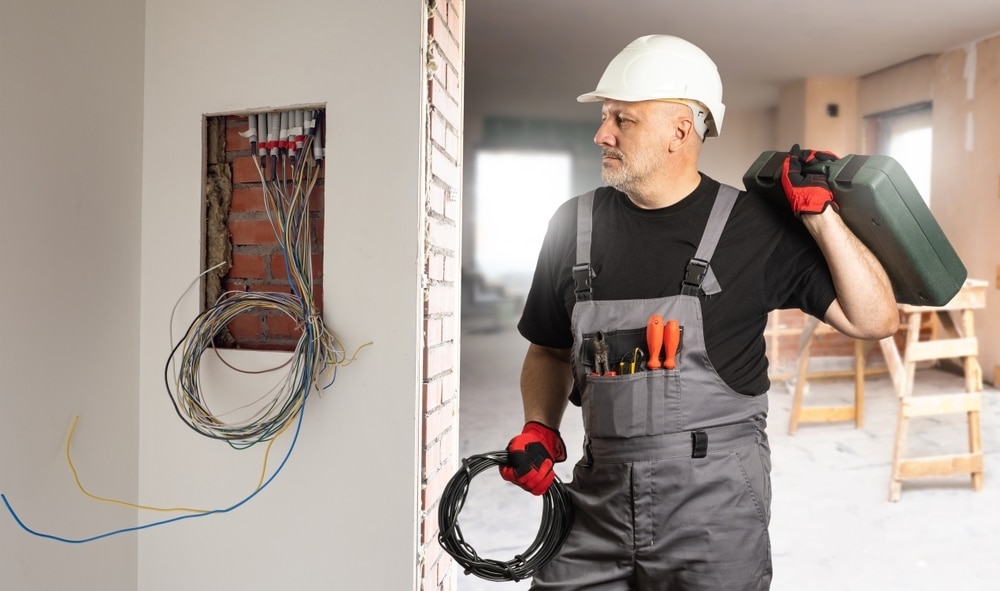

A flat rate price is a fixed fee you charge a customer before starting a job. Rather than tracking hours of labor and the exact materials used, you set a single price for a given service and charge it consistently.
A plumber might charge a flat fee of $200 for a standard drain cleaning. An electrician might charge $180 for a ceiling fan installation. The customer knows the number before any work begins, and that number doesn’t change based on how the job actually goes.
Because the price is fixed while the actual cost of doing the work varies from job to job, your margin on any single job will fluctuate a little. It averages out across enough jobs, and pricing certainty is often worth more to customers than a few dollars either way. Try Service Fusion’s pricing quiz to see how your current approach compares.
Key Takeaways
Flat rate pricing means charging a fixed, pre-set price for a defined service before the work begins.
It works best for repeatable jobs where you know the typical labor time, material cost, overhead, and margin.
Time and materials pricing is usually safer for jobs with an unknown scope or a high risk of surprises.
A flat rate price should be built from labor, materials, overhead, and profit, not guessed from competitor pricing.
Customers often like flat rate pricing because they know the cost upfront and avoid surprise invoices.
A flat rate price book needs regular updates as labor rates, parts costs, fuel, and overhead change.
Service Fusion’s Flat Rate integration, powered by Profit Rhino, helps technicians quote from a ready-built price book in the field.
Flat Rate vs. Time and Materials Pricing
Time-and-materials pricing charges for the actual hours worked and materials used, rather than a preset number.
Say an electrician charges $90 an hour. Under time-and-materials pricing, a ceiling fan installation that takes 1.5 hours costs $135 in labor, plus the cost of parts. Under flat rate pricing, that same job might be priced at a fixed rate calculated in advance to cover labor, materials, overhead, and a margin, regardless of whether the actual job takes 1.5 hours or 2.5 hours.
Time and materials protects your margin on jobs that turn out to be more complicated than expected. Flat rate protects the customer from that same uncertainty, and gives you a price you can quote instantly.
Most residential contractors lean toward fixed pricing. CoConstruct’s analysis of over 38,000 projects found that fixed-price contracts were used 87.5% of the time for jobs under $250,000, dropping to 54.2% on jobs over $1 million, and rising with the number of projects a contractor runs per year. The pattern holds for home services too: flat rate suits jobs you’ve done enough times to price with confidence, and time and materials suits jobs with too many unknowns to price accurately upfront.
| Use flat rate pricing when… | Use time and materials when… |
| The job scope is predictable | The scope is unclear before work starts |
| You have reliable historical job data | Labor time could vary significantly |
| Materials are standard and easy to estimate | Materials may change once work begins |
| Customers want a firm price upfront | The customer understands the work is exploratory |
| The job is repeatable, like common repairs or installs | The job involves diagnosis, renovation, or hidden conditions. |
How to Calculate a Flat Rate Price
A flat rate price should cover four things, calculated in this order: labor, materials, overhead, and profit margin.
- Step 1: Labor. Hourly rate × estimated hours. An electrician at $90/hour on a 1.5-hour job: $90 × 1.5 = $135.
- Step 2: Materials. The direct cost of parts and supplies. Say $210 for this job.
- Step 3: Overhead. Your indirect costs, rent, insurance, and vehicle expenses are spread across jobs as a percentage. At a 30% overhead rate: ($135 + $210) × 0.30 = $103.50.
- Step 4: Profit margin. Applied to everything above it. At a 20% margin: ($135 + $210 + $103.50) × 0.20 = $89.70.
Total flat rate price: $135 + $210 + $103.50 + $89.70 = $538.20, rounded to $540 for the customer.
Treating overhead and profit as separate steps, rather than folding everything into a single markup percentage, makes it easier to see where your price is actually going and to adjust one input without recalculating the whole thing.
When Flat Rate Pricing Works Well (and When It Doesn’t)

Flat rate pricing works best when the scope of a job is predictable and you’ve done it often enough to know your real costs. Good candidates include lawn care, residential cleaning, HVAC servicing, plumbing fixture replacement, electrical panel upgrades, and gutter cleaning, in HVAC, plumbing, and electrical work alike.
It works less well when a job’s scope can change significantly once you’re on-site. A flooring contractor quoting $60,000 to tile a house at a fixed price has no way to bill for extra work if the subfloor turns out to need a full rebuild once the old flooring comes up, so that cost either gets absorbed entirely or turns into a difficult renegotiation mid-project. Kitchen and bathroom renovations, additions, and anything where you can’t fully see the scope until work starts carry the same risk.
For example, a standard water heater replacement may work well as a flat rate job if the access, code requirements, and equipment type are known. A mystery leak inside a wall may be better suited to diagnostic pricing first, because the real scope is hidden until the technician opens the wall. The same logic applies to electrical troubleshooting, HVAC diagnostics, and any job where the first visit is partly about finding the problem.
How to Explain Flat Rate Pricing to Customers
Most resistance to flat rate pricing comes from customers assuming it means paying more, not from the concept itself.
- Lead with certainty, not cost. “You’ll know the exact price before we start, no surprises on the invoice” lands better than any explanation of how the price was calculated.
- Put it in writing before the job, not during. The price should be included on the estimate and agreed to before a technician arrives.
- Don’t over-explain the mechanics. Customers need to trust the number is fair and final, not understand your markup.
- Be upfront about what could change the price. If certain conditions could move a job outside your standard flat rate, say so before starting.
A simple explanation sounds like this:
“Our pricing is flat rate, so you’ll know the cost before we start. The price includes the labor, parts, overhead, and warranty support needed to complete the job properly. If we find something outside the original scope, we’ll explain it and get approval before doing extra work.”
Presenting Multiple Pricing Options
Offering more than one flat rate option for the same job, often good, better, and best, gives customers a choice rather than a single yes-or-no decision. A basic option covers the core repair. A mid-tier adds a warranty extension or related upgrade. A premium option includes a full system check or a longer warranty. Customers comparing tiers often land on the middle option, and the top tier permits some customers to spend more than they’d originally planned. The options need to be genuinely different in value, or customers notice, and the trust that flat rate pricing depends on starts to erode.
What Should a Flat Rate Price Book Include?
A flat rate price book should make it easy for technicians to quote consistently without having to build every price from scratch in the field. At a minimum, each task should include:
- A clear service description, written in language the customer can understand
- Estimated labor time
- Required parts or materials
- Your overhead allocation
- Your target profit margin
- Optional upgrades or related services
- Any exclusions or conditions that would move the job outside the standard flat rate.
The goal is consistency. Two technicians quoting the same standard repair should not come back with two completely different prices unless the scope is genuinely different.
How Often Should You Update Flat Rate Prices?
Flat rate prices should be reviewed regularly, especially when labor costs, parts pricing, fuel, insurance, or overhead change. A price that was profitable last year can slowly become unprofitable if your costs move and the price book stays the same.
At a minimum, review your most common jobs quarterly. Look for tasks where technicians regularly take longer than expected, parts cost more than the price book indicates, or callbacks cut into the margin. Those are usually the first prices that need to be adjusted.
Flat rate pricing is easier to trust when the numbers behind it are up to date.
Pricing Faster with Profit Rhino
Building and maintaining an accurate flat rate price book from scratch is a real-time cost, one that grows as parts pricing shifts and your service list expands.
Service Fusion’s Flat Rate integration, powered by Profit Rhino, gives technicians access to a price book covering more than 30,000 repair types, including common OEM parts, directly from the field. It covers over 90% of the most common tasks in HVAC, plumbing, and electrical work and is updated quarterly. According to our data, companies using the integration have saved an average of $2,964 per technician per year, and Profit Rhino’s pricing has been used across more than 60 million repairs industry-wide. There’s no separate onboarding fee, and most teams are running within a few days. Review current plans to see which tier includes it.
Customer appetite for this kind of pricing is real: in a survey of 11,000 homeowners, 92% said they wanted a fixed, upfront price.
See Flat Rate Pricing in Action
Book a free demo to see how Service Fusion’s Flat Rate integration, powered by Profit Rhino, puts a 30,000-task price book in your technicians’ hands.
Frequently Asked Questions About Flat Rate Pricing
A few questions often come up once businesses start weighing a move to flat rate pricing.
What is flat rate pricing and how does it work?
Flat rate pricing charges a fixed, preset price for a specific service, communicated to the customer before work begins, rather than billing for actual hours and materials used.
Is flat rate pricing better than hourly pricing?
Neither is better outright. Flat rate suits jobs with a predictable, repeatable scope. Hourly or time-and-materials pricing suits larger or more variable jobs where the actual cost is hard to estimate in advance.
How do you calculate a flat rate price?
Add labor (hourly rate × hours) to materials, then overhead as a percentage of labor plus materials, then profit margin as a percentage of everything before it.
Do customers actually prefer flat rate pricing?
Many do. A survey of 11,000 homeowners found 92% wanted a fixed, upfront price rather than an hourly bill.
What is an example of flat rate pricing?
An example of flat rate pricing is charging $200 for a standard drain cleaning or $180 for a ceiling fan installation, with the price agreed before the work begins. The customer pays a fixed price for the defined service rather than based on the exact number of hours the job takes.
What is the difference between flat rate and hourly pricing?
Flat rate pricing gives the customer a single fixed price before work starts. Hourly pricing charges for the actual time spent on the job, usually plus materials. Flat rate pricing gives customers more certainty, while hourly pricing gives contractors more protection when the scope is unpredictable.
When should a contractor not use flat rate pricing?
Contractors should be careful with flat rate pricing when the scope is unclear, the problem is hidden, or the job could change significantly once work begins. Diagnostic work, major renovations, and jobs with unknown site conditions may be better handled with hourly, diagnostic, or staged pricing.
How do you explain flat rate pricing to customers?
Explain that flat rate pricing gives the customer a fixed price before work begins, so they know what the job will cost upfront. The price includes labor, materials, overhead, and margin for a defined scope of work. If the scope changes, the contractor should explain the change and get approval before charging more.
Set Prices Your Customers Can Trust
Flat rate pricing works when it’s built on real numbers: your actual labor time, material costs, overhead, and margin, not a guess.
Book a free demo to see how Service Fusion and the Profit Rhino integration can put accurate flat rate pricing in your team’s hands.
Article Sources
1. CoConstruct. Residential Home Builders Use Fixed Price Contracts 80% of the Time. Accessed August 5th, 2026.
2. Service Fusion. Flat Rate Pricing/Profit Rhino Integration. Accessed August 5th, 2026.
3. Profit Rhino. Flat Rate Price Book and Repair Task Data. Accessed August 5th, 2026.
4. Service Fusion internal data on Flat Rate integration usage and technician savings. Accessed August 2026.
Related Posts
Field Service Software Data Migration Checklist
Continue ReadingBest Field Service Apps for Technicians in 2026
Continue ReadingStay Informed
Get the latest news and insights plus, Service Fusion offers and updates.Thank you for your submission.
SHARE