
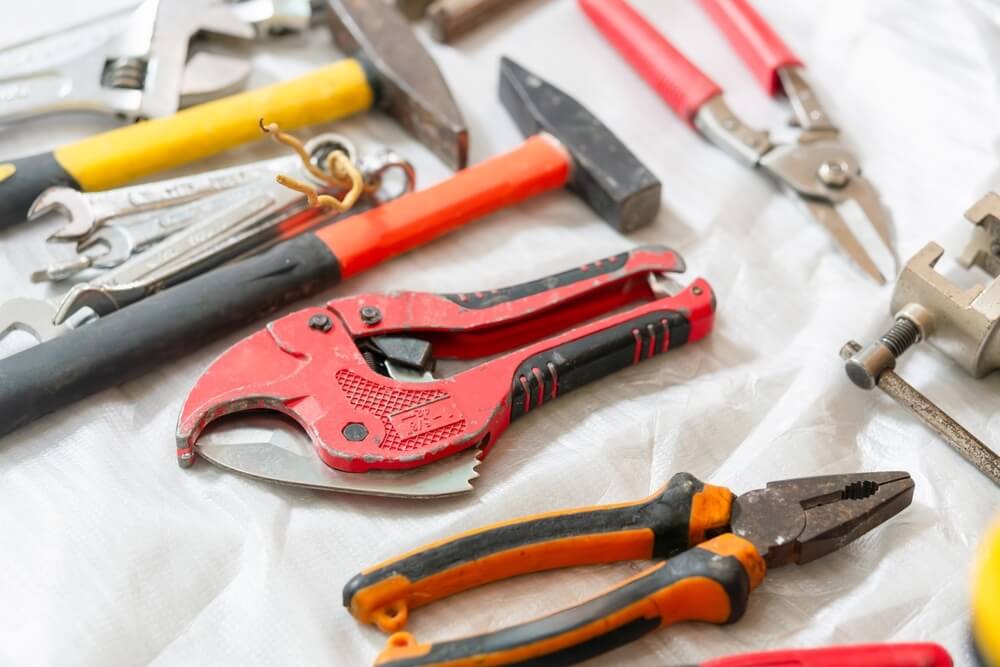

Showing up to a call without the right tool costs time, and with refrigerant and electricity involved, it can cost much more This guide covers the must-have tools for HVAC technicians, how to build a starter kit for a new hire, and what to know about certification and safety gear before the first job. If you are kitting out someone new, pair it with our guide to onboarding new field technicians.
Quick Answer: What Tools Does an HVAC Technician Need?
An HVAC technician needs hand tools (nut drivers, wrenches, pliers, and tubing tools), diagnostic tools (a manifold gauge set, multimeter, clamp meter, thermometers, and a leak detector), refrigerant-handling equipment (a certified recovery machine, vacuum pump with micron gauge, and scale), and safety gear (PPE and a lockout/tagout kit). Technicians who work with refrigerant also need EPA Section 608 certifications.
HVAC Technician Tool List: 20 Must-Have Tools
This is the full list of HVAC technician tools, grouped by job. Each item says what the tool does and why it earns a place on the truck. The U.S. Bureau of Labor Statistics reports that HVAC mechanics and installers held about 440,900 jobs in 2025, and that apprentices learn to use a wide range of tools as part of their training, so nobody learns all of this at once.
HVAC Hand Tools and Measuring
These are the tools that come out on nearly every call. They’re also the cheapest place for a beginner to start building a kit.
- Nut driver and screwdriver set. Panel screws on much equipment use a hex head, so a nut driver set in common sizes saves time compared to a screwdriver alone.
- Wrenches and hex keys. Adjustable wrenches, combination wrenches, and hex keys cover most fittings and fasteners. A service wrench or valve key may also be needed for some access valves, depending on the systems you work on.
- Pliers, cutters, and wire strippers. Needle-nose and slip-joint pliers, side cutters, and a stripper and crimper all handle wiring and general work.
- Tubing cutter, reamer, and flaring or swaging tools. These make clean copper line cuts and fittings. A poor cut or flare is a common source of leaks.
- Tape measure and level. Equipment pads and condensate lines need to sit level, and measuring is part of every install and replacement.
- Cordless drill and driver with bit set. It speeds up panel removal, mounting, and installation work.
Diagnostic Tools
Diagnostics tell you what the system is doing before you open it up further. Reading these correctly is where experience shows.
- Manifold gauge set. Hoses and gauges measure pressure inside the system. EPA’s definition of a technician includes attaching and detaching hoses and gauges to measure pressure, so this is where certification starts to matter.
- Digital multimeter. It checks voltage, continuity, and resistance on controls, motors, and wiring.
- Clamp meter. It reads amp draw without disconnecting a wire. Comparing it to the nameplate shows whether a motor or compressor is working too hard.
- Digital thermometers. Probe and clamp thermometers measure supply and return air and line temperatures, which feed into superheat and subcooling readings.
- Refrigerant leak detector. An electronic detector finds leaks that a visual check will miss.
- Manometer. It measures pressure differences, including gas pressure on furnaces, and static pressure in ductwork when used with the right probes. See our guide to CFM and airflow in HVAC for why airflow readings matter.
Refrigerant Handling
This group is regulated. The equipment must meet EPA standards, and the person using it must be certified or closely supervised by someone who is.
- Refrigerant recovery machine. This removes refrigerant from the system so it’s not released into the air. EPA requires recovery and recycling equipment to be tested, and AHRI and UL are the EPA-approved certifying organizations. Look for the certification label before you buy.
- Vacuum pump and micron gauge. The pump removes air and moisture from the system before charging, and the gauge shows whether the system is actually dry.
- Refrigerant scale. Weighing in the charge is more accurate than guessing from pressures alone.
- Brazing torch kit and nitrogen regulator. Brazing joins copper lines, and flowing nitrogen through the line while you braze keeps oxide from forming inside the pipe.
Safety and Access
HVAC technicians have one of the highest rates of injuries and illnesses of all occupations, according to the BLS. This group matters as much as anything above.
- PPE. Safety glasses, work gloves, hearing protection, and safety-toe boots are the baseline. Our HVAC safety guide covers each in more detail.
- Lockout/tagout kit. Locks and tags keep equipment de-energized while someone is working on it. For HVAC technicians, this matters on service calls involving electrical panels, disconnects, motors, compressors, and controls.
- Ladder. A properly rated ladder is a must for attic access, rooftop units, and outdoor equipment.
- Cleaning tools and jobsite basics. A coil brush, fin comb, shop vacuum, and flashlight or headlamp keep routine service calls moving. Cleaning tools help maintain coils and drain pans, while a reliable light is essential for attics, crawl spaces, basements, and poorly lit equipment areas.
Do this: Check every tool in the kit before the season starts. Test meters against a known source, check hoses and gauges for wear, and replace PPE that’s cracked or damaged. OSHA’s PPE rule says defective or damaged protective equipment must not be used.
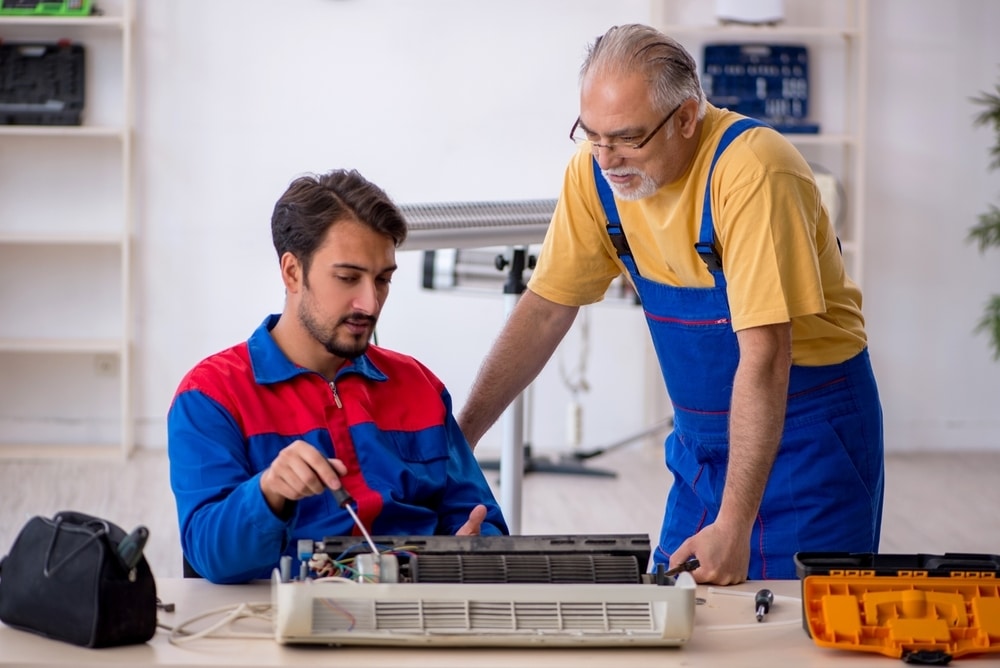
HVAC Tools for Beginners: An HVAC Starter Tool Kit for New Hires
A new technician does not need all 20 tools on day one. This section sorts the list into what to buy first, what to add in the first year, and what to add as the work specializes. It works for an apprentice buying their own tools and for an owner kitting out a new hire.
| Stage | What to get | Why |
| Day-one kit | Nut drivers and screwdrivers, wrenches and pliers, tape measure, multimeter, flashlight or headlamp, PPE, lockout/tagout kit | Safe, supervised work on common repairs |
| First year | Clamp meter, digital thermometers, manifold gauge set, tubing tools, cordless drill, ladder | Hands-on diagnostics and service calls |
| As you specialize | Recovery machines, vacuum pumps and micron gauges, scale, brazing kits, leak detectors, manometers | Refrigerant work, installations, and gas systems. |
Buying the safest and most-used items first makes more sense than buying a large kit all at once. When a technician works under supervision, the company’s recovery equipment and gauges often remain on the truck while the new hire builds a personal set. If you’re still learning the trade, our guide to HVAC apprenticeships explains how training and on-the-job learning fit together.
Who Pays for HVAC Technician Tools? Kitting Out a New Hire
Decide before the first day which tools the company supplies and which the technician owns, and put it in writing. Disagreements about tools are a common source of friction in the first few weeks. If you’re planning your own company, see how to start an HVAC business for guidance on budgeting for equipment.
OSHA’s general PPE rule (29 CFR 1910.132) states that protective equipment required to comply with OSHA standards must be provided by the employer at no cost to employees, with exceptions. Employers are not required to pay for non-specialty safety-toe footwear or non-specialty prescription safety eyewear if workers can wear them off the job site, or for everyday clothing and ordinary weather gear such as winter coats and sunscreen. That rule does not cover hand tools, so reimbursement depends on your state law and company policy. Check your state’s rules before you write the policy.
A short checklist for owners:
- Issue PPE and a lockout/tagout kit before the first dispatch.
- Stock the truck with your standard tool and parts list. Our guide to HVAC business management covers the basics of inventory management.
- Confirm which refrigerant tools stay with the truck and which the technician owns.
- Confirm EPA 608 status, or document the supervision plan for an apprentice.
- Add the new hire to your scheduling software and mobile tools on day one.
For the full first-90-days process, see our guide to onboarding new field technicians. If you’re still building the team, our guide to hiring and retaining HVAC technicians covers where to find candidates and what to ask in an interview.
Don’t Forget the Digital Tools
The truck also carries a phone or tablet, and what’s on it affects how smoothly a call goes. This section covers the software side of a technician’s kit, which is a separate decision from the tools above.
A good field app gives technicians job details, customer and equipment history, notes, photos, estimates, invoices, navigation, and payment tools in one place. Service Fusion’s Worker App does this from the same job record the office uses, and technicians can take payment on-site before they leave. See our comparison of the best field service apps for technicians for how the options differ, or read more about mobile apps for field service.
Digital checklists also help technicians use their tools consistently on every visit. Our HVAC maintenance checklist shows where meters, gauges, and recovery gear come into a tune-up, and our free HVAC load calculator is another handy reference.
Running an HVAC team? See how Service Fusion’s HVAC software puts scheduling, dispatch, job history, and invoicing in one system, or read Is Service Fusion Right for HVAC Companies?
EPA 608 Certification: What You Need Before Handling Refrigerant
The right tools are only half of the work with refrigerant. EPA regulations under Section 608 of the Clean Air Act require technicians who maintain, service, repair, or dispose of equipment that could release refrigerant to be certified. Passing an EPA-approved test earns the credential, and Section 608 certifications do not expire.
EPA recognizes four types:
- Type I for small appliances.
- Type II for high-pressure and very high-pressure appliances.
- Type III for low-pressure appliances.
- Universal for all equipment types.
Apprentices are exempt from the certification requirement as long as a certified technician closely and continually supervises them. EPA also prohibits intentionally venting refrigerants during equipment servicing or disposal, with a few narrow exceptions, so recovery equipment is required to stay compliant. For more on credentials, see our guides to HVAC technician certification and how to get your HVAC license.
Want technicians to have job history, invoices, and payment tools on the same device as their schedule? Book a free demo to see how Service Fusion supports HVAC teams in the field.
HVAC Tools FAQs: Common Questions From Technicians and Owners
These are the questions technicians and owners ask most often about building a toolkit, from what to buy first to who pays. For software and workflow questions, see our overview of field service management software.
What tools do HVAC technicians use every day?
Most days involve nut drivers, wrenches, and pliers, a multimeter and clamp meter, thermometers, and a manifold gauge set. Technicians also use a leak detector, a vacuum pump, and a recovery machine for refrigerant jobs, along with PPE on every call. Our HVAC maintenance checklist shows where each tool comes into play during a tune-up.
What tools does a beginner need to start in HVAC?
Start with hand tools, a multimeter, a flashlight or headlamp, PPE, and a lockout/tagout kit. Add a clamp meter, thermometers, and a manifold gauge set in your first year, then build toward refrigerant tools as your certification and responsibilities grow. See our guide to HVAC apprenticeships for how training works.
Do I need EPA 608 certification before I buy HVAC tools?
No. Anyone can buy hand tools and meters. Certification is required to perform work involving the maintenance, servicing, repair, or disposal of equipment that could release refrigerant, including attaching gauges to measure pressure. Apprentices can work under close, continual supervision by a certified technician. See our HVAC technician certification guide for the full path.
Do HVAC technicians have to buy their own tools?
It depends on the employer and your state. OSHA generally requires employers to provide PPE at no cost, with exceptions for items like non-specialty safety-toe boots. That rule does not cover hand tools, so check your state’s requirements and ask the company for its tool policy in writing. Owners can see our guide to hiring and retaining HVAC technicians for what to include in an offer.
How often should HVAC tools be calibrated or replaced?
Follow the manufacturer’s guidance for meters and gauges, and inspect hoses, cords, and PPE before each season. Damaged PPE should be replaced rather than used. If a meter gives readings that do not match a known reference, stop using it until it is checked.
What software do HVAC technicians need on their phone or tablet?
A field service app that shows the schedule, customer, and equipment history, and lets technicians document work, build estimates, send invoices, and take payment on site. Our guide to technician mobile apps compares the options, and our roundup of the best field service software for HVAC companies covers the full platform. You can also read about mobile apps for field service.
What is the difference between a manifold gauge set and a multimeter?
A manifold gauge set measures refrigerant pressure inside the system, so it’s used on the refrigerant side. A multimeter measures electrical values such as voltage and continuity. Technicians need both because most service problems are one or the other.
What should be in an HVAC tool bag?
An HVAC tool bag should include the hand tools and diagnostic tools used on most calls: nut drivers, screwdrivers, wrenches, pliers, wire strippers, a multimeter, clamp meter, thermometers, flashlight or headlamp, PPE, and lockout/tagout supplies. Refrigerant tools such as gauges, a recovery machine, a vacuum pump, and a scale may stay on the truck or be added as the technician’s certification and responsibilities grow.
Equip Your HVAC Team to Work Faster
The right tools make each call quicker and safer, and the right software keeps the rest of the job organized. Service Fusion gives HVAC businesses scheduling, dispatch, job history, mobile tools, and invoicing in one place.
Book a free Service Fusion demo to see how it works for your team.
Article Sources
- U.S. Environmental Protection Agency. Section 608 Technician Certification Requirements. Updated July 15th, 2026.
- U.S. Environmental Protection Agency. Stationary Refrigeration: Prohibition on Venting Refrigerants. Updated December 8th, 2025.
- U.S. Environmental Protection Agency. Refrigerant Recovery and Recycling Equipment Certification. Updated July 6th, 2026.
- Occupational Safety and Health Administration. 1910.132 — General requirements (Personal Protective Equipment). Accessed October 12th, 2026.
- U.S. Bureau of Labor Statistics. Heating, Air Conditioning, and Refrigeration Mechanics and Installers. Updated August 27th, 2026.
Related Posts
How Kuhlman Electric Found Their Field Service ‘Game Changer’ and Doubled Revenue
Continue ReadingHow to Reduce Idle Time for Field Service Technicians
Continue ReadingStay Informed
Get the latest news and insights plus, Service Fusion offers and updates.Thank you for your submission.
SHARE